About Hemkund Sahib
Hemkund Sahib is associated with Guru Gobind Singh Ji, the tenth Sikh Guru. According to Sikh religious tradition, the site is connected with the spiritual experiences described in Bachittar Natak. Pilgrims visit the gurudwara to offer prayers, reflect on the teachings of Sikhism and experience the natural beauty of the Himalayas. Reaching the shrine involves a steep uphill trek from Ghangaria, making the journey an important part of the pilgrimage.
Highlights
· One of the most important Sikh pilgrimage sites in Uttarakhand
· Officially known as Gurudwara Sri Hemkund Sahib
· Dedicated to the spiritual legacy of Guru Gobind Singh Ji
· Located at an altitude of approximately 4,329 metres
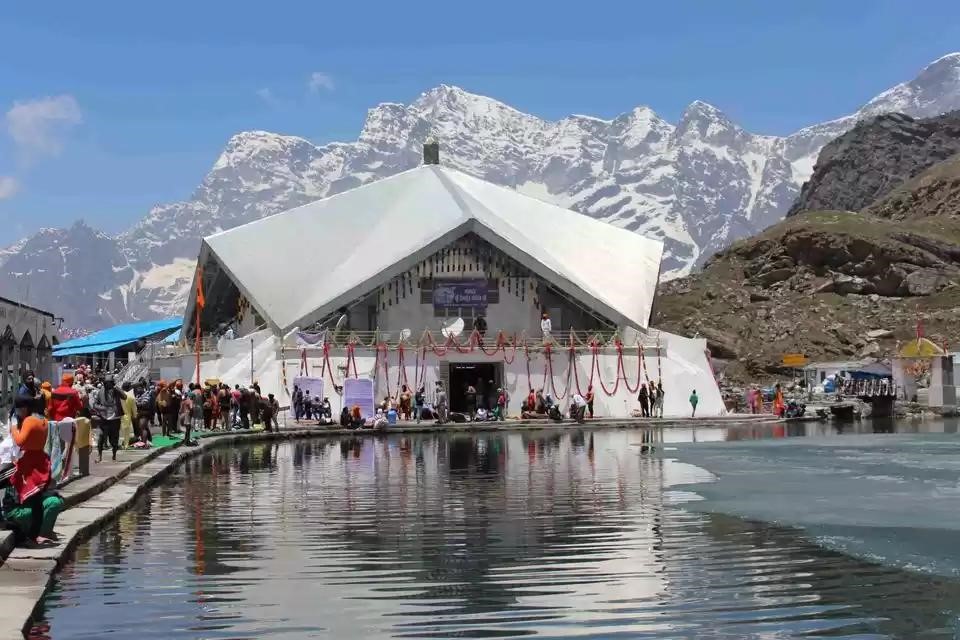
· Situated beside the sacred Hemkund glacial lake
· Surrounded by high Himalayan peaks and rocky mountain slopes
· Known for its distinctive polygonal structure and sloping roof
· Associated with the Sikh religious text Bachittar Natak
· Reached by a challenging uphill trek from Ghangaria
· A seasonal pilgrimage destination attracting devotees and trekkers from across India and beyond
Things to Know
· Hemkund Sahib is located in Chamoli district, Uttarakhand, in the high-altitude Himalayan region.
· The shrine is a Sikh gurudwara, not a Hindu temple, and welcomes visitors who respect its religious customs.
· Hemkund is commonly understood to mean “Lake of Snow.”
· The shrine is associated with Guru Gobind Singh Ji and the spiritual account described in Bachittar Natak.
· The gurudwara stands beside Hemkund Lake, which is considered sacred by pilgrims.
· Govindghat is the usual road-accessible starting point for the pilgrimage. Visitors travel towards Ghangaria before beginning the final uphill trek.
· The trek from Ghangaria to Hemkund Sahib is approximately 6 km one way, although trail conditions and local arrangements may vary.
· The route is steep and physically demanding because of the high altitude. Visitors should walk at a comfortable pace and take regular breaks.
· Hemkund Sahib is generally open during the summer and early autumn pilgrimage season. Exact opening and closing dates depend on snow conditions and official announcements each year.
· July and August may bring heavy monsoon rain, landslides and travel delays along the approach routes.
· Temperatures near the lake can remain very cold even during summer, and weather conditions can change quickly.
· Rishikesh is a commonly used railway access point, while Jolly Grant Airport near Dehradun is a major airport option for reaching the region.
· Check official pilgrimage updates, route access, weather forecasts and available medical facilities before travelling.
· Wear sturdy trekking shoes and warm, waterproof clothing, and carry drinking water and suitable food.
· Allow time to acclimatise to the altitude. Seek medical advice before undertaking strenuous high-altitude travel if you have health concerns.
· Follow gurudwara rules, respect the sanctity of the shrine, avoid littering and do not enter the lake unless local authorities explicitly permit it.